Writers & Thinkers
Novelists, poets, historians, and philosophers

Ahmed Baba
1556 – 1627
West Africa (Timbuktu, Songhai) and Morocco (Marrakesh)
Timbuktu jurist and writer, deported to Marrakesh after Morocco's 1591 conquest. He wrote a biographical dictionary of Maliki scholars and a fatwa on the enslavement of Africans before returning home.
Stub: research pending

Aimé Césaire
1913 – 2008
Martinique and Paris, France
Martinican poet and politician who, with Senghor and Damas, shaped the Négritude movement, wrote Cahier d'un retour au pays natal (1939), and was elected mayor of Fort-de-France in 1945.
Stub: research pending

Amos N. Wilson
1941 – 1995
United States (Mississippi; New York)
Psychologist and author who taught at CUNY and the College of New Rochelle and wrote books including The Developmental Psychology of the Black Child and Blueprint for Black Power.
Stub: research pending

Anthony T. Browder
active from 1980s (IKG study tours since 1987)
United States (Washington, D.C.); Egypt (Luxor)
Howard University-trained author, publisher and cultural historian who founded IKG Cultural Resources, wrote Nile Valley Contributions to Civilization, and directs the ASA Restoration Project at the tomb of Karakhamun in Luxor.
Needs review

Asa G. Hilliard III
1933 – 2007
United States (Texas, Denver, San Francisco, Atlanta)
Educational psychologist and Georgia State University professor of urban education, a leading advocate of African-centered education, testing-bias expert witness, and co-founder of the Association for the Study of Classical African Civilizations.
Stub: research pending

August Wilson
1945 – 2005
Pittsburgh, Pennsylvania and Seattle, Washington, United States
Playwright raised in Pittsburgh's Hill District whose ten-play cycle follows Black American life decade by decade through the 20th century; Fences (1987) and The Piano Lesson (1990) won Pulitzer Prizes.
Stub: research pending
Carter G. Woodson
1875 – 1950
Virginia and Washington, D.C., United States
Virginia-born historian, son of formerly enslaved parents, who earned a Harvard doctorate in 1912, co-founded the Association for the Study of Negro Life and History in 1915, and launched Negro History Week in 1926, the forerunner of Black History Month.

Chancellor Williams
1898 – 1992
United States (South Carolina; Washington, D.C.); field research in Ghana
Howard University historian and sociologist whose The Destruction of Black Civilization (1971) surveyed thousands of years of African history and won the Black Academy of Arts and Letters book award.
Stub: research pending

Cheikh Anta Diop
1923 – 1986
Senegal (studied and worked in Paris and Dakar)
Senegalese historian, physicist and politician who argued that ancient Egypt was a Black African civilization culturally linked to the rest of Africa; his work inspired many and was disputed by many specialists.

Chinua Achebe
1930 – 2013
Nigeria (born Ogidi, eastern Nigeria)
Nigerian novelist, poet and essayist whose Things Fall Apart (1958) became the most widely read work of African fiction; he was founding editor of Heinemann's African Writers Series and won the 2007 Man Booker International Prize.

Claudia Jones
1915 – 1964
Trinidad; United States; United Kingdom
Trinidad-born journalist and Communist activist, Jones was deported from the US in 1955, founded the West Indian Gazette in London in 1958, and helped launch the Caribbean carnival that preceded Notting Hill Carnival.
Stub: research pending
Drusilla Dunjee Houston
1876 – 1941
United States (West Virginia; Oklahoma; Arizona)
Self-trained historian, educator and journalist whose Wonderful Ethiopians of the Ancient Cushite Empire (1926) argued for Black African influence on ancient civilizations; historians of her day largely dismissed it.
Stub: research pending

Frances Cress Welsing
1935 – 2016
United States (Chicago; Washington, D.C.)
Washington, D.C. psychiatrist known for her Cress Theory of Color-Confrontation and The Isis Papers (1991), which framed white supremacy psychologically; her theories drew strong criticism as pseudoscientific.
Stub: research pending

Frantz Fanon
1925 – 1961
Martinique, France, Algeria and Tunisia
Martinique-born psychiatrist and political thinker. He wrote Black Skin, White Masks (1952), left his hospital post in Algeria to work for the National Liberation Front (FLN), and theorised anticolonial liberation in The Wretched of the Earth (1961).

Gwendolyn Brooks
1917 – 2000
Topeka, Kansas and Chicago, Illinois, United States
Topeka-born poet raised in Chicago who drew on South Side life; Annie Allen won her the 1950 Pulitzer Prize, the first awarded to a Black writer, and she was Illinois poet laureate from 1968.
Stub: research pending

The Harlem Renaissance
c. 1918 – mid-1930s
Harlem, New York City, United States, with related activity in other cities and abroad
A flowering of African American literature, art, music and thought centred in Harlem from the end of World War I to the mid-1930s, also called the New Negro Movement. Fed by the Great Migration and given a manifesto by Alain Locke's The New Negro (1925), it is now often studied as part of a wider, transatlantic Black modernism.

Ivan Van Sertima
1935 – 2009
Guyana; United States (Rutgers, New Jersey)
Guyanese-born Rutgers professor and founding editor of the Journal of African Civilizations, whose They Came Before Columbus (1976) argued for pre-Columbian African contact with the Americas, a thesis disputed by archaeologists.
Stub: research pending
Jacob H. Carruthers
1930 – 2004
United States (Texas; Chicago)
Historian and political scientist who taught for 32 years at Northeastern Illinois University's Center for Inner City Studies, co-founded the Kemetic Institute and ASCAC, and wrote on ancient Egypt and the Haitian Revolution.
Stub: research pending

James Baldwin
1924 – 1987
United States and France
Harlem-born novelist, essayist and playwright whose works, from Go Tell It on the Mountain to The Fire Next Time, made him one of the most influential American voices on race, religion and sexuality.

James Small
active from 1960s (SNCC, NAACP, OAAU 1966–1980)
United States (New York); Ghana
Lecturer and activist who taught Black Studies at City College of New York, served eleven years as bodyguard to Malcolm X's sister Ella Collins, and is an Ifa priest and OAAU vice-president.
Needs review

John Henrik Clarke
1915 – 1998
United States (Alabama; Harlem, New York)
Largely self-taught historian and Pan-Africanist, he was a pioneer of Africana studies. He was principally responsible for creating Hunter College's Black and Puerto Rican Studies department and wrote or edited more than thirty books on African and African American history.

Joy DeGruy
active from 2000s (book reported as new in 2006)
United States (Portland, Oregon)
Social work researcher and longtime Portland State University assistant professor whose book Post Traumatic Slave Syndrome argues that slavery's trauma has intergenerational effects on African Americans.
Needs review

Kaba Hiawatha Kamene
Contemporary
United States
Pan-African historian, educator and lecturer, known as a featured voice in the Hidden Colors documentary series and as the founder of the African-centered study program Per Ankh.
Needs review
Langston Hughes
1901 – 1967
Missouri and New York, United States
Joplin-born poet, novelist and playwright whose work drew on blues and jazz rhythms and everyday Black speech, making him a central voice of the Harlem Renaissance and a chronicler of Black American life into the 1960s.

Lorraine Hansberry
1930 – 1965
Chicago, Illinois and New York, United States
Chicago-born playwright and activist whose A Raisin in the Sun (1959) made her the first Black woman to have a play produced on Broadway and the youngest playwright, and first Black playwright, to win the New York Drama Critics' Circle Award; she died of cancer at 34.

Maya Angelou
1928 – 2014
Missouri, Arkansas, California and North Carolina, United States; Egypt and Ghana
St. Louis-born poet, memoirist, performer and civil rights worker whose first memoir, I Know Why the Caged Bird Sings, drew wide acclaim; she read "On the Pulse of Morning" at the 1993 presidential inauguration and taught at Wake Forest University from the early 1980s until her death.
Meroitic script
c. 3rd century BCE – 4th century CE
Kingdom of Kush (Sudan)
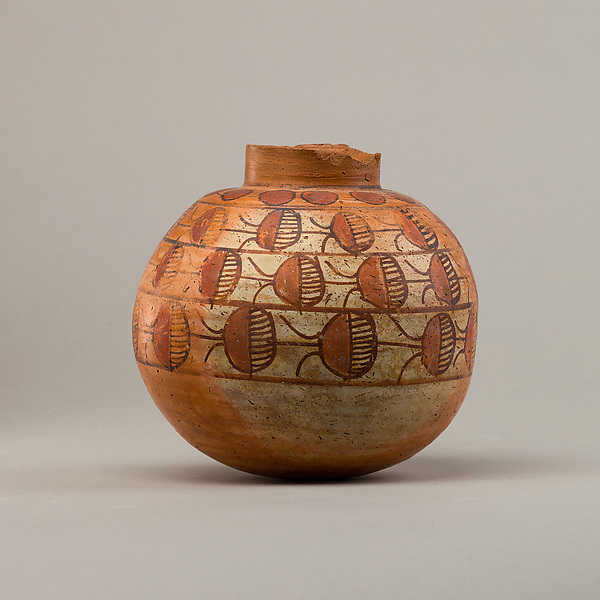
Kush's own writing system, in hieroglyphic and cursive forms adapted from Egyptian, used 23 signs. Griffith deciphered their sound values in 1909, but the Meroitic language remains largely untranslated.
Stub: research pending
Mfundishi Jhutyms Ka-n Heru Hassan Kamau Salim
active from 1978
United States (Harlem, New York)
Harlem-based teacher of Kemetic history, language and spirituality and a grandmaster of the African martial art Kupigana Ngumi, who by his own account developed the Kemetic spiritual house Kera Jhuty Heru Neb Hu in 1978.
Needs review
Molefi Kete Asante
b. 1942
United States (Georgia; Philadelphia)
Temple University professor of Africology, born Arthur Lee Smith Jr., who developed the theory of Afrocentricity, founded the Journal of Black Studies, and led the first U.S. doctoral program in African American Studies.
Needs review

Phillis Wheatley
c. 1753 – 1784
West Africa (Senegambia); Boston, Massachusetts; London, England
Poet kidnapped from West Africa as a child and enslaved in Boston, whose Poems on Various Subjects, Religious and Moral (London, 1773) was the first poetry book published by an African American.

Ralph Ellison
1913 – 1994
Oklahoma City, Oklahoma; Tuskegee, Alabama; New York, United States
Oklahoma City-born novelist and essayist whose Invisible Man (1952) won the 1953 National Book Award; a second novel he never finished appeared after his death as Juneteenth.
Stub: research pending

Richard Wright
1908 – 1960
Mississippi and Chicago, Illinois, United States; Paris, France
Mississippi-born writer who moved to Chicago in 1927; his best-selling novel Native Son (1940) and memoir Black Boy (1945) exposed American racism, and from 1946 he lived in Paris.
Stub: research pending

Runoko Rashidi
1954 – 2021
United States (California); global travel (Egypt, India, Asia, Europe)
Historian, writer and lecturer, born Ronald Ross, who studied the African presence in Asia and Europe, edited work with Ivan Van Sertima, and led study tours worldwide.
Stub: research pending

The Timbuktu manuscripts
c. 12th/13th – early 20th century (manuscripts); rescue 2012 – 2013
West Africa (Timbuktu and region, Mali)
Hundreds of thousands of manuscripts, mostly in Arabic script, held in Timbuktu's family and public libraries and covering law, mathematics, poetry and history. In 2012–13 custodians smuggled most of them to Bamako to keep them from armed groups.

Toni Morrison
1931 – 2019
United States (Ohio, New York, New Jersey)
Novelist, editor and teacher whose books, including The Bluest Eye, Song of Solomon and Beloved, reshaped American fiction. In 1993 she became the first Black woman awarded the Nobel Prize in Literature.

Walter Rodney
1942 – 1980
Guyana; Jamaica; Tanzania
Guyanese historian and activist, author of How Europe Underdeveloped Africa (1972), who taught at Dar es Salaam, co-founded the Working People's Alliance, and was killed by a bomb in Georgetown in 1980.
Stub: research pending

W. E. B. Du Bois
1868 – 1963
Massachusetts, United States, and Ghana
Great Barrington-born scholar and activist who wrote The Souls of Black Folk (1903), helped found the Niagara Movement and the NAACP, edited its magazine The Crisis from 1910 to 1934, and spent his last years in Ghana.

Yosef ben-Jochannan ("Dr. Ben")
1918 – 2015
Ethiopia (birthplace per sources); United States (Harlem, New York)
Harlem-based writer and lecturer known as "Dr. Ben", credited with 49 books on ancient Nile Valley civilizations. He taught at City College and Cornell and led study tours to Egypt for decades. His influence on Black community education is widely celebrated, while his scholarship and some of his claimed degrees have been publicly questioned.

Zora Neale Hurston
1891 – 1960
Alabama and Florida, United States
Writer, anthropologist and folklorist born in Notasulga, Alabama, and raised in Eatonville, Florida, who collected Black folklore across the South and Caribbean and wrote Their Eyes Were Watching God (1937).