Lewis Latimer
1848 – 1928
United States (Massachusetts, Connecticut, New York)
Self-taught draftsman and inventor who drew patent drawings for Alexander Graham Bell, patented an improved process for making carbon filaments for incandescent lamps in 1882, and later served Edison's companies as a patent expert.
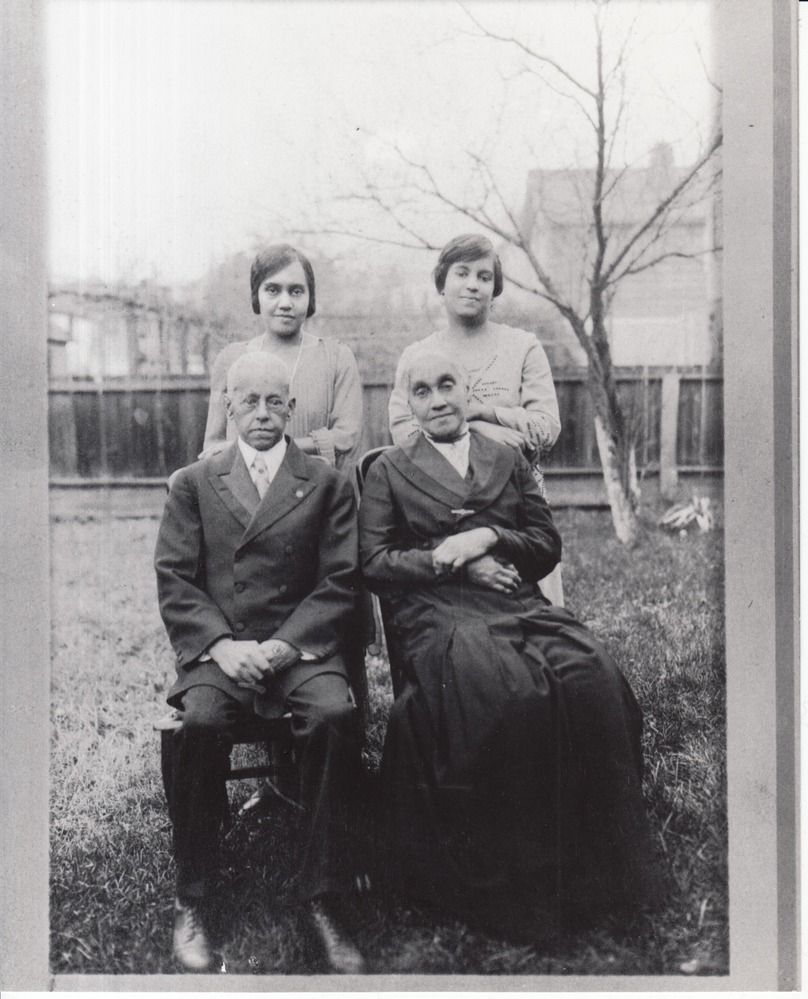
Early life
Lewis Howard Latimer was born on September 4, 1848, in Chelsea, Massachusetts, the youngest child of George and Rebecca Latimer. Both parents had escaped slavery in Virginia. George's arrest in Boston in 1842 became a well-known fugitive slave case, which ended when a minister paid his enslaver for his release. After George disappeared in 1857 the family was split up, and Lewis had only a grade-school education. In 1864, at 16, he enlisted in the U.S. Navy and served aboard the USS Massasoit until the Civil War ended.
Draftsman
Back in Boston, Latimer took a job as office boy at the patent law firm of Crosby and Gould. He taught himself mechanical drawing by watching the firm's draftsman, and when that post fell vacant he took it over, at lower pay than his predecessor. In 1874 he received his first patent, shared with Charles W. Brown, for an improved water closet for railroad cars.
In 1876 he prepared drawings for Alexander Graham Bell's telephone patent application. The USPTO describes this as drafting work done under deadline pressure. Latimer drew the patent drawings. He did not invent the telephone and is not named as an inventor on Bell's patent.
Electric lighting
In 1880 Hiram Maxim hired Latimer as a draftsman and assistant manager at the U.S. Electric Lighting Company in Bridgeport, Connecticut. Edison had already patented his incandescent lamp, and Latimer did not invent the light bulb. His contribution was to the making of its carbon filaments. In 1881 he and Joseph V. Nichols received a patent for an electric lamp. On January 17, 1882, he received Patent No. 252,386, "Process of Manufacturing Carbons," in his own name and assigned to U.S. Electric Lighting. According to the USPTO, the process enclosed the filaments in cardboard envelopes during carbonizing, which reduced breakage, and it was used in making Maxim's lamps. Under the company's rules Maxim held rights to the work, and the USPTO notes that he took credit for it. Latimer also supervised lamp installations in North America and trained factory workers in London.
Edison years
Edison's organization hired Latimer in the mid-1880s; sources give 1884 or 1885. He worked mainly as a draftsman, patent investigator and expert witness defending Edison lighting patents, and he stayed on after the 1892 merger that formed General Electric. In 1890 he published Incandescent Electric Lighting, a practical guide to the Edison system. His later patents included an apparatus for cooling and disinfecting (1886) and a locking rack for hats and coats.
Legacy
In 1918 Latimer was named one of the Edison Pioneers, the only Black member of that group of early Edison associates. He also wrote poetry and plays. He died at his home in Flushing, Queens, on December 11, 1928. That house, now the Lewis Latimer House Museum, was moved in the 1980s to save it from demolition. The Queens Borough Public Library holds his papers.
Achievements
- 1874: First patent, with Charles W. Brown, for railroad-car water closets (No. 147,363)
- 1876: Prepared patent drawings for Alexander Graham Bell's telephone application
- 1881: Electric lamp patent with Joseph V. Nichols (No. 247,097)
- 1882: Patent for a "Process of Manufacturing Carbons" (No. 252,386)
- 1890: Published Incandescent Electric Lighting, a practical guide to the Edison system
- 1918: Named an Edison Pioneer, the only Black member
Related entries
Sources
- USPTO, "Bringing light to all: Lewis Latimer" (Journeys in Innovation) (Primary source)
- Thomas A. Edison Papers, Rutgers University, "Latimer's Patents" (Scholarly)
- Engineering and Technology History Wiki (IEEE), "Lewis Latimer" (Reference)
- Linda Hall Library, "Scientist of the Day: Lewis H. Latimer" (Reference)
Suggest a correction: opens once the database is connected.