Maggie L. Walker
1864 – 1934
Richmond, Virginia
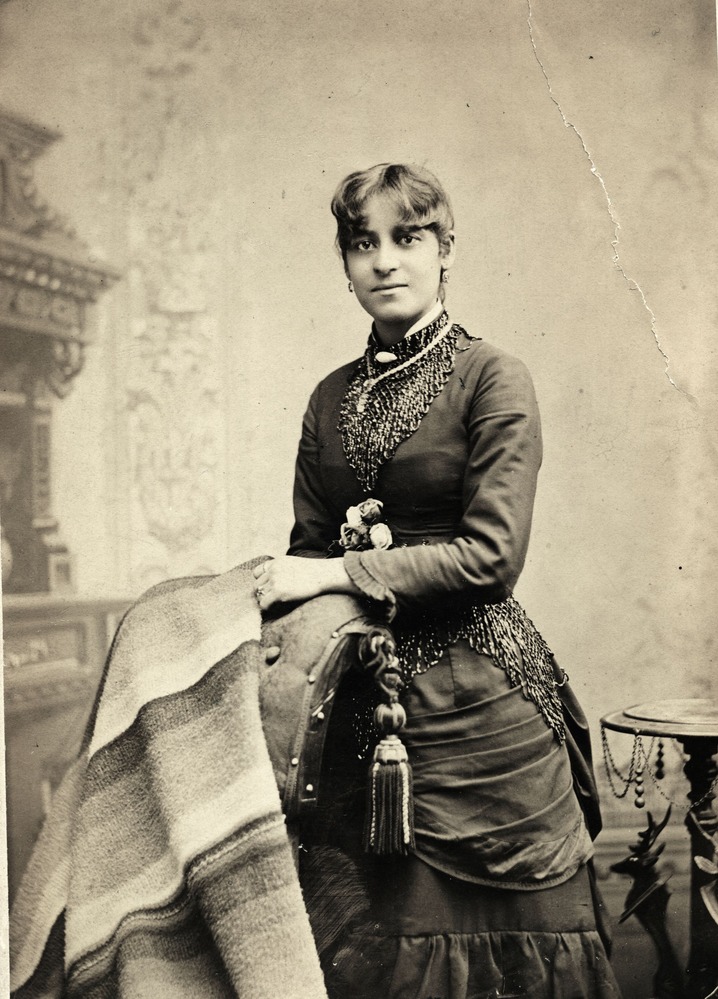
Richmond-born Maggie Lena Walker revived the Independent Order of St. Luke, launched its newspaper in 1902, and in 1903 opened St. Luke Penny Savings Bank, becoming the first Black woman in the U.S. to found and lead a bank.
Early life
Maggie Lena Walker was born in Richmond, Virginia, on July 15, 1864, on the estate of Elizabeth Van Lew, the Union spy for whom her mother, the formerly enslaved Elizabeth Draper, worked. Encyclopedia Virginia identifies her biological father as Eccles Cuthbert, an Irish American writer. Her mother soon married William Mitchell, whose surname Maggie took; he was found drowned in the James River in 1876. To help the family, she delivered laundry her mother washed for white households.
She attended Richmond's segregated public schools and trained as a teacher at the Richmond Colored Normal School. As a student she took part in a protest over unequal graduation arrangements for Black and white pupils. She graduated in 1883 and taught for three years, leaving the classroom when she married brick contractor Armstead Walker Jr. in 1886, because married women were barred from teaching.
The Independent Order of St. Luke
Walker joined the Independent Order of St. Luke, a Black fraternal society founded in Baltimore in 1867, as a teenager. In 1899 she was elected its Right Worthy Grand Secretary, taking charge of an organization close to bankruptcy, and she held the post until her death. Under her leadership membership and finances recovered dramatically.
She built a set of businesses around the order. The St. Luke Herald began publishing in 1902. In 1901 she had called for a bank that would turn the community's nickels into dollars, and St. Luke Penny Savings Bank was chartered in July 1903 and opened that November in Jackson Ward. The Federal Reserve Bank of Richmond describes it as the first bank founded by a Black woman in the United States. It took very small deposits, made small loans, and helped Black Richmonders buy homes. In 1905 she opened the St. Luke Emporium department store, which closed in 1911 under pressure from white merchants.
Civic leader
Walker helped lead the 1904 boycott of Richmond's newly segregated streetcars, helped found the city's NAACP branch, and served on the NAACP's national board. In 1921 she ran unsuccessfully for state superintendent of public instruction on a "Lily Black" Republican ticket.
Her later life brought hardship. In 1915 her son Russell accidentally shot and killed her husband, mistaking him for an intruder. Diabetes and an unhealed leg injury left her using a wheelchair by about 1928.
Legacy
As the Depression struck, Walker merged her bank with two other Black-owned Richmond banks to form Consolidated Bank and Trust Company in 1930, and she chaired its board. It became the longest continuously Black-run bank in the country. She died in Richmond on December 15, 1934. Her Leigh Street home is now the Maggie L. Walker National Historic Site.
Achievements
- Graduated from the Richmond Colored Normal School and taught for three years (1883–1886)
- Elected Right Worthy Grand Secretary of the Independent Order of St. Luke (1899)
- Launched the St. Luke Herald newspaper (1902)
- Founded St. Luke Penny Savings Bank and served as its president (1903–1929)
- Helped lead the Richmond streetcar boycott against segregated seating (1904)
- Opened the St. Luke Emporium department store (1905)
- Oversaw the merger that created Consolidated Bank and Trust Company (1930)
Related entries
Sources
Suggest a correction: opens once the database is connected.