Medgar Evers
1925 – 1963
Mississippi, United States
Decatur-born World War II veteran who became the NAACP's first field secretary in Mississippi, investigated racist violence and led desegregation campaigns, and was shot dead at his Jackson home in June 1963; his killer was convicted in 1994.
Early life
Medgar Wiley Evers was born on July 2, 1925, in Decatur, Mississippi, the third of four children of James and Jesse Evers. He attended segregated schools in Decatur and Newton.
In 1943 he entered the U.S. Army and served in segregated units in England, Belgium and France. The King Institute notes that meeting segregation while in uniform deepened his resolve to fight it at home. After the war he finished high school at the Alcorn College laboratory school and went on to Alcorn A&M College, where he was active in sports, debate and student publications. He married classmate Myrlie Beasley on December 24, 1951, and graduated in 1952.
Organizing in Mississippi
The couple moved to Mound Bayou, where Evers sold insurance for Magnolia Mutual and organized NAACP chapters across the Mississippi Delta. After the Supreme Court's 1954 Brown v. Board of Education ruling, he applied to the University of Mississippi law school and was turned down.
The NAACP then hired him as its first field secretary in Mississippi, the organization's first salaried post in the state, and he moved to Jackson. The King Institute dates the appointment to December 1954; the National Park Service dates his move to Jackson to January 1955. Threats and harassment followed almost at once.
When fourteen-year-old Emmett Till was lynched in 1955, Evers worked to publicize the killing, sought out witnesses, and helped those who testified leave Mississippi. In 1957 he attended an early meeting of the Southern Christian Leadership Conference and was elected an officer, but resigned that year after NAACP leader Roy Wilkins advised against joining a rival group. In 1962 he helped James Meredith connect with NAACP lawyers in the fight that desegregated the University of Mississippi. In spring 1963 he announced mass demonstrations in Jackson after the mayor refused to create a biracial committee.
Assassination and the long road to justice
Shortly after midnight on June 12, 1963, Evers returned from an NAACP meeting and was shot in the back in his driveway. His wife and three children, still awake after watching President Kennedy's televised civil rights address, came out to find him; he died within the hour. The rifle was found nearby, and the FBI matched a fingerprint on its scope to Byron De La Beckwith, a white supremacist.
Beckwith was tried twice in the 1960s; both times all-white juries could not reach a verdict. At Myrlie Evers's urging the case was reopened, a new grand jury indicted Beckwith in December 1990 with help from fresh witnesses, and in 1994 he was convicted and sentenced to life in prison.
Legacy
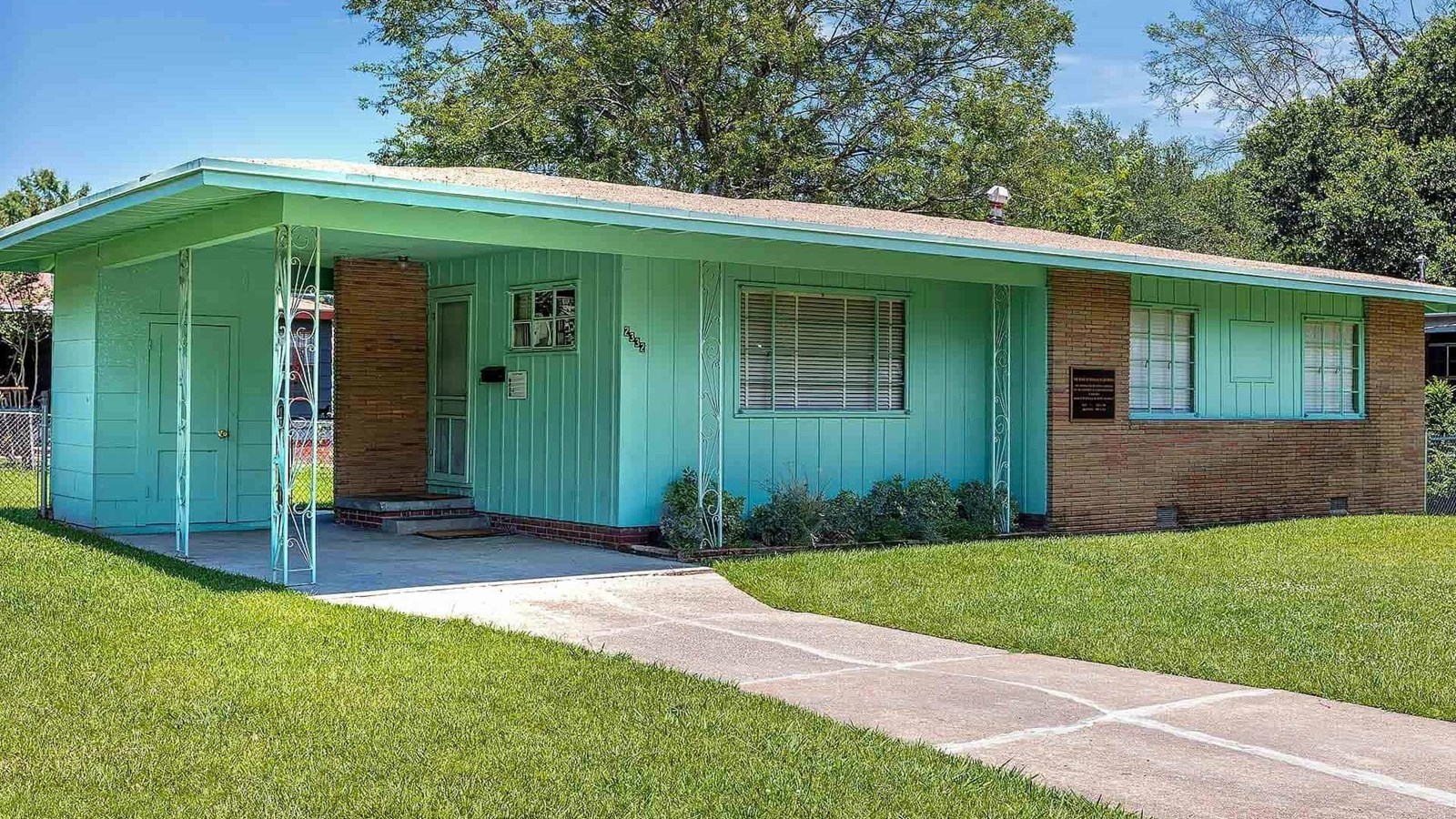
Evers was buried at Arlington National Cemetery and posthumously received the NAACP's Spingarn Medal in 1963. The National Park Service describes his murder as the first killing of a national civil rights leader of the era. His Jackson home is now the Medgar and Myrlie Evers Home National Monument, and Myrlie Evers later chaired the NAACP from 1995 to 1998.
Achievements
- Served in segregated Army units in England, Belgium and France (from 1943)
- Graduated from Alcorn A&M College (1952)
- Applied to the University of Mississippi law school after Brown v. Board and was denied (1954)
- Became the NAACP's first Mississippi field secretary (late 1954 / January 1955)
- Publicized the lynching of Emmett Till and helped witnesses leave Mississippi (1955)
- Helped James Meredith gain admission to the University of Mississippi (1962)
- Posthumously awarded the NAACP Spingarn Medal (1963)
Related entries
Sources
Suggest a correction: opens once the database is connected.