Mutapa Empire
c. 1450 – 1917 (independent power to c. 1630s)
Southern Africa: northern Zimbabwe, the Zambezi valley and central Mozambique
Shona state founded in the 15th century by Nyatsimba Mutota that controlled gold-producing lands between the Zambezi and Limpopo and traded gold and ivory with coastal merchants; civil wars and Portuguese intervention broke its independence in the 1600s.
Origins
Mutapa was a Shona kingdom that emerged in the fifteenth century in the lands south of the Zambezi River. Its rulers carried the title Mwene Mutapa, which Britannica glosses from Shona as "Ravager of the Lands." Shona oral tradition names Nyatsimba Mutota as the founder. One tradition says he was sent north to explore the country at the Zambezi's bend and reported that it was rich in salt and game. Britannica places him in the late fifteenth century and says the political center moved during his reign from the Zimbabwe plateau north toward Mount Fura near the Zambezi.
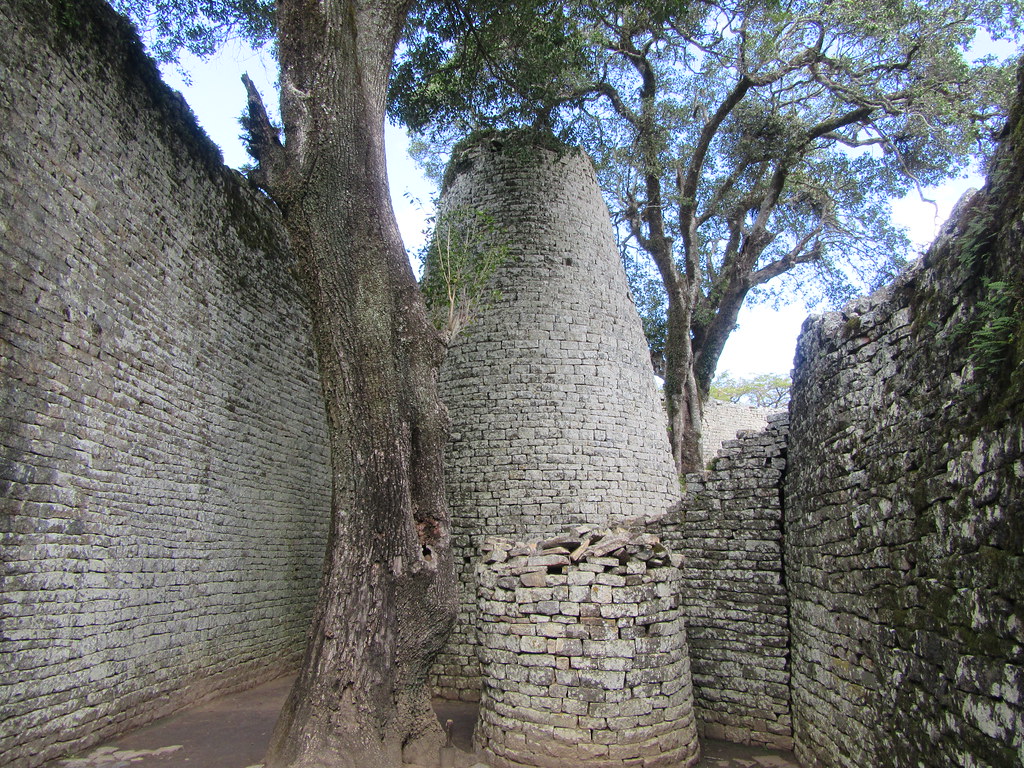
Historians link the new state to the decline of Great Zimbabwe, whose elites appear to have moved north in the second half of the fifteenth century. World History Encyclopedia notes shared pottery, tools and weapons but cautions that the exact relationship between Great Zimbabwe and Mutapa is not known.
Kingdom and trade
Mutota's son Nyanhehwe Matope enlarged the kingdom. BlackPast describes its domain under him stretching along the Zambezi valley from Zumbo toward the Indian Ocean. The ruling elite controlled the trade in gold and ivory, which moved through Sofala to Muslim merchants on the Swahili coast. Excavations at trading sites have turned up Chinese porcelain and Indian glass beads. The king was also the kingdom's religious head, and a senior spirit medium sat among his officials. Islam never took hold at court.
Civil war and Portuguese intervention
From the 1530s Portuguese traders pushed inland, setting up market posts (feiras) and trying to sway royal politics and convert the king to Christianity. Internal rivalries weakened the state. Provincial governors, often royal kin, resisted central control, and the southern leaders known as Changamire broke away to found their own state; sources date the split differently, from around 1490 to the 1590s. In 1629 a Mwene Mutapa tried to expel the Portuguese. He was deposed, and his successor, Mavura Mhande Felipe, was forced to grant them broad trading and mining rights. By the 1630s Mutapa had lost its independence.
Later history and legacy
A reduced Mutapa state survived for centuries by playing African rivals and the Portuguese against each other. Britannica notes that the Rozvi kingdom overshadowed it by the late seventeenth century. BlackPast dates its final end to 1917, when the last ruler, Mambo Chioko, was killed fighting Portuguese forces. Mutapa is remembered as a major African state that controlled the gold trade of the Zimbabwe plateau for generations.
Achievements
- Late 15th century: Nyatsimba Mutota moves the center of power north toward the Zambezi
- Under Matope: rule extends along the Zambezi valley toward the Indian Ocean
- From the 1530s: Portuguese traders push inland from the coast
- 1629: Portuguese depose the ruling king and install Mavura Mhande Felipe
- 1917: last ruler, Mambo Chioko, killed fighting the Portuguese
Related entries
Sources
Suggest a correction: opens once the database is connected.