Narmer
c. 3100 BCE (reign; estimates range from c. 3150 to c. 3000 BCE)
Egypt (Upper and Lower Egypt)
Early Egyptian king, often regarded as the first to rule a unified Upper and Lower Egypt around 3100 BCE; the Narmer Palette shows him wearing the crowns of both lands, though how and when unification happened is still debated.
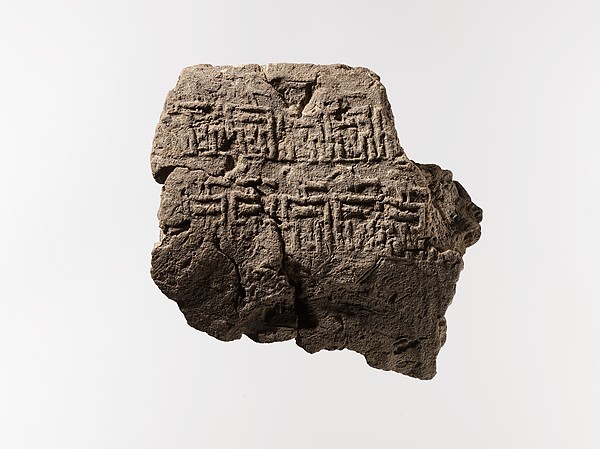
The first king of the Two Lands
Narmer ruled Egypt at the very start of its dynastic history, around 3100 BCE; published estimates run from about 3150 to about 3000 BCE. He is often regarded as the first king to rule both Upper Egypt, the Nile valley in the south, and Lower Egypt, the Delta in the north. Smarthistory places the union of the Two Lands under him around 3000 BCE, at the opening of the Early Dynastic Period. Few personal details about him survive, and much of what is said about him rests on a small number of objects and inscriptions.
The Narmer Palette
The key object is the Narmer Palette, a carved slab of greywacke about 64 cm tall now in the Egyptian Museum in Cairo. The archaeologists Quibell and Green found it in 1897–98 in a cache of votive objects at the temple of Horus at Nekhen (Hierakonpolis), an early royal center in the south. On one side Narmer wears the crown of Upper Egypt and strikes a kneeling enemy. On the other he wears the red crown of Lower Egypt. A bull, a symbol of the king, also appears.
Scholars read the palette in different ways. Some, as World History Encyclopedia notes, see it as recording Narmer's conquest of the north. Others treat it as a ceremonial image of kingship that mixes historical events with ritual themes, and so not a straightforward record.
Narmer and Menes
Later Egyptian tradition, preserved by the priest-historian Manetho in the third century BCE, names Menes as Egypt's first king. Early Egyptologists treated Menes and Narmer as different people, while Flinders Petrie argued they were the same man. Others connect the name Menes with Narmer's probable successor, Hor-Aha. Some scholars also argue that Egypt was not fully unified until much later, under the Second Dynasty king Khasekhemwy. World History Encyclopedia notes that scholars now lean toward Narmer as the unifier, but there is no consensus.
Tomb and family
Narmer was buried at Umm el-Qa'ab, the royal cemetery at Abydos where every First Dynasty king had a tomb. The archaeologists Kaiser and Dreyer identified his tomb, chambers B17 and B18, in 1982. A large alabaster jar bearing his name, found near the tomb of Aha, supports the view that Narmer came just before Aha. World History Encyclopedia reports that Narmer married Neithhotep, a princess of Naqada, and that some scholars think she may have ruled after him, though this is not widely accepted.
Legacy
Narmer's reign marks the threshold between the Predynastic period and dynastic Egypt. Over the following centuries the scattered towns of the Nile valley were bound under a single king, the political form that defined Kemet for the rest of its ancient history.
Achievements
- c. 3100 BCE: rules at the start of Egypt's First Dynasty, probably as predecessor of Hor-Aha
- Depicted on the Narmer Palette wearing the crowns of Upper and Lower Egypt
- Buried at Umm el-Qa'ab, Abydos (tomb B17/B18, identified 1982)
Related entries
Sources
Suggest a correction: opens once the database is connected.