Nok culture
c. 900 BCE – c. 200 CE
Central Nigeria, including the Jos Plateau, north of the Benue River
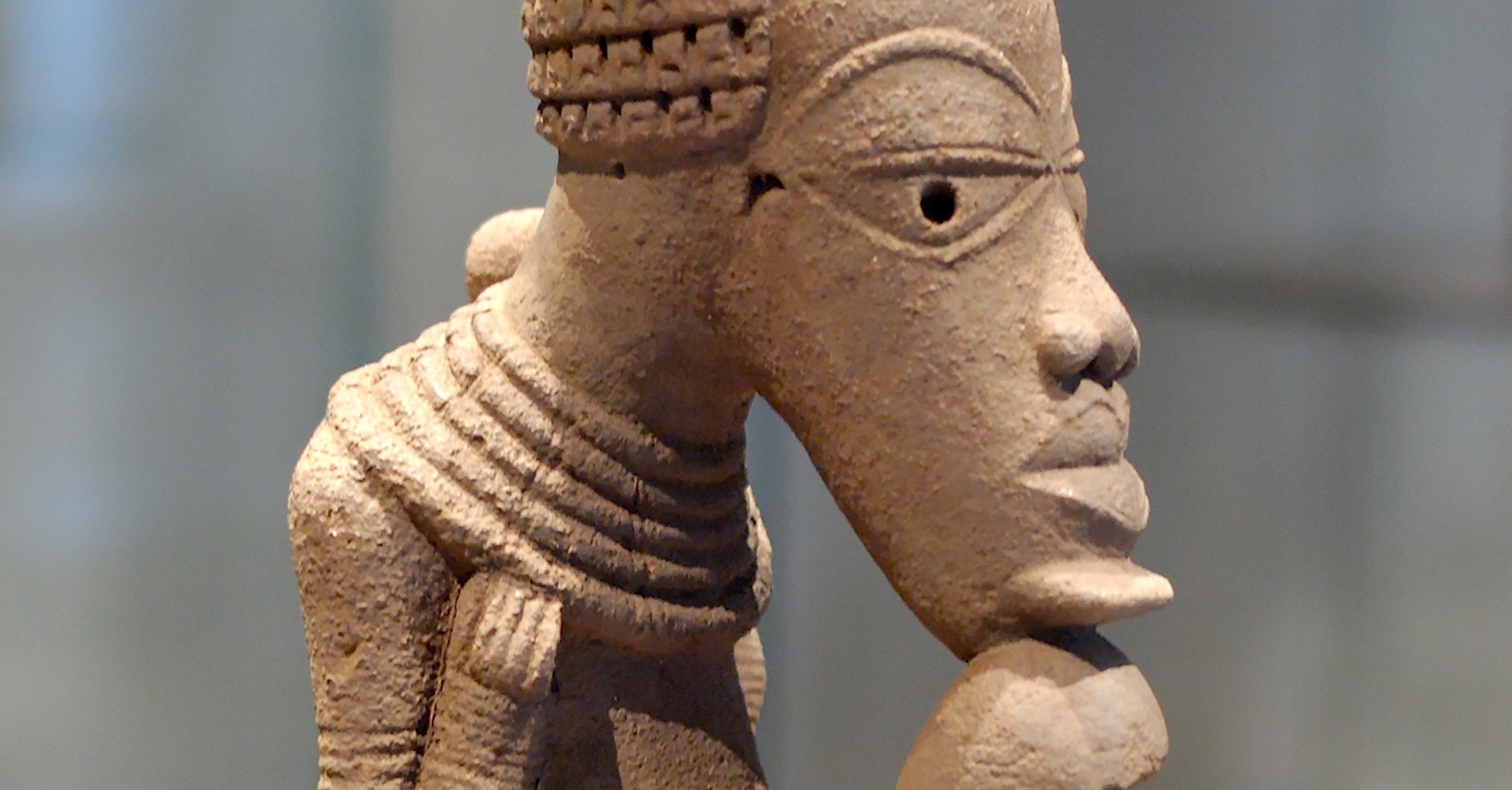
Iron Age culture of central Nigeria known for hollow, coil-built terracotta figures, the oldest known figurative sculpture south of the Sahara, and for some of the region's earliest iron smelting.
Discovery
The Nok culture takes its name from a village on the Jos Plateau in central Nigeria. In 1943, tin mining near Nok turned up a terracotta head. The British archaeologist Bernard Fagg, who was working near Jos, also acquired a head said to have been used on a scarecrow in a yam field, now known as the Jemaa Head. Fagg collected nearly 200 terracottas, excavated several sites and gave the culture its name. Related heads, figures, animals and pottery have since been found across a wide area east of the Niger and north of the Benue.
Dating
Fagg's evidence pointed to a span of roughly 500 BCE to 200 CE. Later work, including excavations by a Goethe University Frankfurt team led by Peter Breunig and Nicole Rupp with Nigerian colleagues, has pushed the start back to at least about 900 BCE. Pottery and terracotta become sharply scarcer in soil layers after about 200 CE, which points to a decline. Its cause is unknown. Overuse of resources such as wood for charcoal, climate change and conflict have all been proposed.
The terracottas
Nok sculptures were made from local clay and fired hard. Most of the larger ones are hollow and were built up in coils like pots. Many were then shaped by cutting away clay, a method closer to wood carving. Common features include large heads in relation to bodies, triangular or almond-shaped eyes with pierced pupils, elaborate hairstyles and beaded jewellery. Figures stand, sit or kneel, and some appear to show illnesses such as elephantiasis. The Met notes that what the sculptures meant, and why heads are so large, remains unknown. Fagg thought they may have been linked to worship around smelting. Breunig has suggested that the uniform clay across the region may reflect centralized production or shared rules. Both ideas remain hypotheses.
Iron
Nok is one of the earliest known centres of ironworking in sub-Saharan Africa. Fagg's excavations at Taruga found about 13 furnaces closely associated with terracottas, and charcoal from them dates to roughly the 4th–2nd centuries BCE. The Frankfurt team later dated charcoal from a smelter at Intini to about 519–410 BCE. Iron tools are found alongside stone axes, which suggests iron was scarce at first. Scholars still debate whether ironworking reached the region from North Africa or developed locally. Archaeology magazine describes this argument as heated, and the World History Encyclopedia says the evidence does not yet favour any one view.
Looting and legacy
Collector demand in Europe and the United States drove looting of Nok sites for decades. It eased after about 2005, when export controls tightened and forgeries flooded the market. Many objects were removed without any record of where they were buried, which limits what can be known about them. Some scholars have proposed links between Nok and later Nigerian art traditions such as Igbo-Ukwu and Ife. The Met and other sources treat these links as unproven.
Achievements
- 1943: tin mining near the village of Nok exposes a terracotta head, leading to the culture's identification
- Produced hollow, coil-built terracotta heads and figures, the earliest known figurative sculpture in sub-Saharan Africa
- Iron-smelting furnaces at Taruga dated by radiocarbon to roughly the 4th–2nd centuries BCE
- Charcoal from a smelter at Intini dated to c. 519–410 BCE by a Goethe University Frankfurt team
Related entries
Sources
Suggest a correction: opens once the database is connected.