Patrice Lumumba
1925 – 1961
Democratic Republic of the Congo
Congolese nationalist who led the Mouvement National Congolais and became the Congo's first prime minister at independence on 30 June 1960; dismissed that September and later captured, he was killed in Katanga on 17 January 1961.
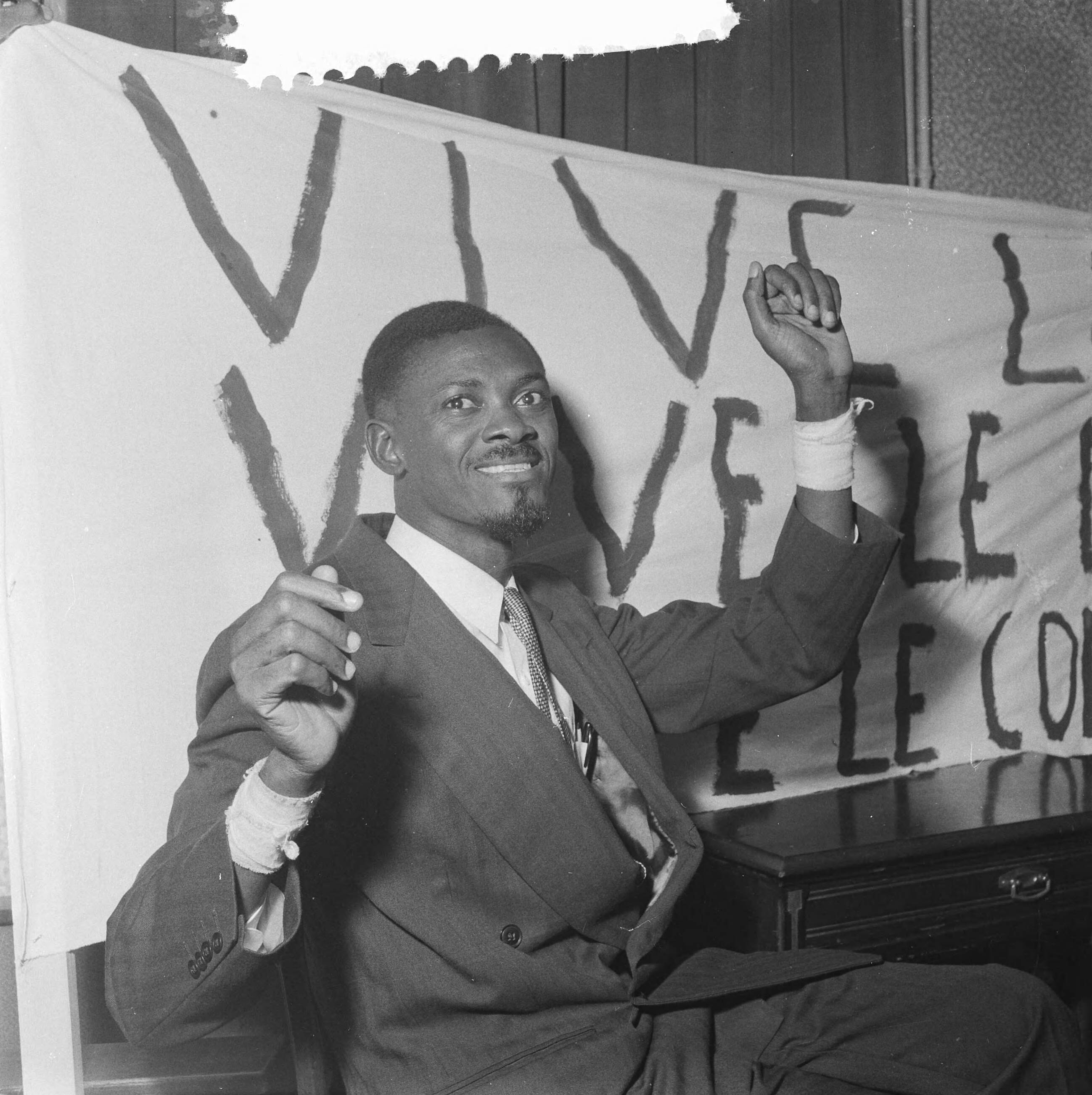
Early life
Patrice Émery Lumumba was born on 2 July 1925 in Onalua, in the Sankuru district of Kasai in the Belgian Congo, into the Tetela people. He was educated at Protestant and Catholic mission schools. In 1954 he worked as a postal clerk in Stanleyville (now Kisangani); after a 1955 conviction for embezzlement his sentence was reduced, and in 1957 he moved to Léopoldville (now Kinshasa) as sales director for a brewery.
Nationalist leader
In Léopoldville Lumumba helped establish the Mouvement National Congolais (MNC), which BlackPast dates to October 1958. That December he addressed the Pan-African gathering in Accra sponsored by Ghana's prime minister, Kwame Nkrumah. In 1959 the MNC split, and in November he was briefly detained on charges of inciting riots in Stanleyville, but he was released in time for the Round Table Conference on independence in Brussels. In the May 1960 elections his party won more seats than any other.
Prime minister
The Congo became independent on 30 June 1960, with Lumumba as prime minister and his rival Joseph Kasavubu as president. His independence-day speech, which denounced Belgian colonial rule, made him a national figure. Within days the army mutinied, Belgian troops intervened and Katanga seceded. Lumumba and Kasavubu turned to the United Nations, which sent a large peacekeeping force (ONUC), but the UN would not use force against the secession. Lumumba then sent troops into South Kasai, where soldiers killed many civilians, and sought Soviet military help. Kasavubu dismissed him on 5 September 1960, and Colonel Joseph Mobutu soon took control of the government.
Arrest and killing
Placed under house arrest, Lumumba fled in late November 1960 to try to reach Stanleyville and was captured by Mobutu's soldiers. He was held at the Thysville army camp until 17 January 1961, when he and two associates, Maurice Mpolo and Joseph Okito, were flown to Elisabethville in secessionist Katanga. A later UN commission concluded that they were killed near Elisabethville that same day, probably in the presence of senior Katangan officials. Katanga announced weeks later, falsely, that they had been killed by villagers after escaping.
Responsibility and legacy
Who bears responsibility remains debated. A U.S. Senate inquiry (the Church Committee) found that the CIA had worked to remove Lumumba in late 1960 but that its officers were not involved in his death. Brian Urquhart, a senior UN official at the time, argued that Mobutu and the Belgian government engineered the killing, that the United States condoned it, and that the UN failed to protect him. Urquhart also judged Lumumba a sincere but inexperienced and erratic leader, a view many admirers reject. Belgium has acknowledged a share of the blame: after a parliamentary inquiry, its foreign minister expressed regret for the "moral responsibility" of ministers of the time, and on 20 June 2022 Prime Minister Alexander De Croo apologized and returned one of Lumumba's teeth to his family. Across Africa he remains a symbol of the struggle for independence and unity free of colonial interference.
Achievements
- Helped found the Mouvement National Congolais (MNC), 1958
- Spoke at the Pan-African conference hosted by Kwame Nkrumah in Accra, December 1958
- Led the largest single party in the May 1960 elections
- Became the Congo's first prime minister at independence, 30 June 1960
Related entries
Sources
- South African History Online, "Patrice Émery Lumumba" (Reference)
- U.S. Department of State, Office of the Historian, Foreign Relations of the United States, 1961–1963, Vol. XX, Congo Crisis, Document 6 (Editorial Note) (Primary source)
- Brian Urquhart, UN News, "Character Sketches: Patrice Lumumba" (Primary source)
- BlackPast.org, "(1958) Patrice Lumumba, 'Speech at Accra'" (Reference)
- VRT NWS, "Belgium returns Mr Lumumba's tooth to Congo" (20 June 2022) (Reference)
Suggest a correction: opens once the database is connected.